When a Missed Call Becomes a Text
A homeowner in Doral calls your AC company at 5:40 PM. The house is 88 degrees inside. Your tech is in an attic, and the office line is busy.
The phone rings out. At 5:42, that homeowner is talking to another company.
They did not leave a voicemail. They will not call back. You will never know they tried.
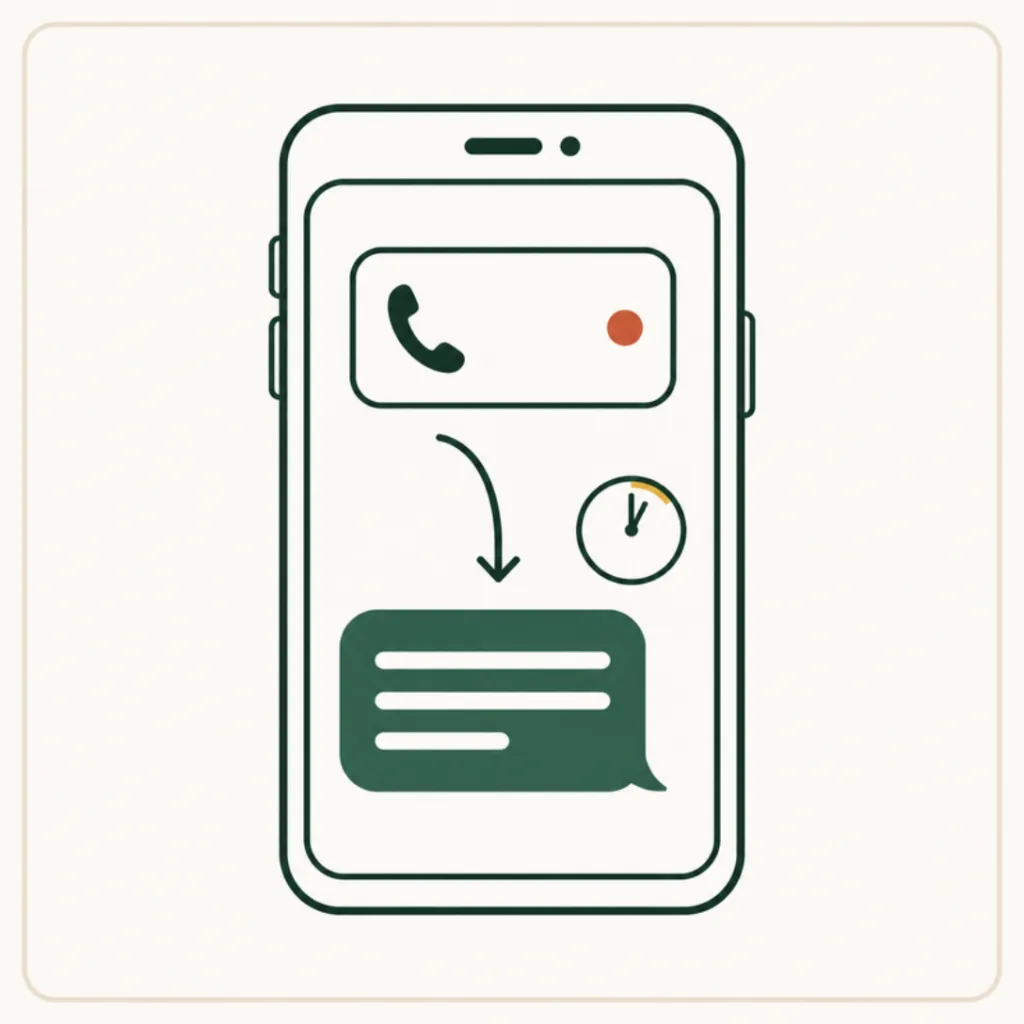
The core idea: A missed call is often a lost job, not a short delay. A text back in under a minute keeps the customer talking to you instead of the next company.
Why a missed call costs so much
Most owners think of a missed call as small. The customer will leave a message, or try again later. Many do not.
A person with no AC, a leak, or a dead outlet wants help now. If your line rings out, the next number is one tap away. And most people in trouble call two or three companies anyway.
So the question is not "will they wait?" Most will not. The question is "who reaches them first?"
How text-back works
There are two parts. Neither is hard.
- Your phone keeps working. Calls still ring the way they do now. Your number either moves over to the system or forwards to it. That way, the system can tell when a call ended with no answer.
- A text goes out on its own. It is set up to send in under a minute. It is short and plain. It names your company and offers a real next step.
There is no app to download. There is no form to fill out. It is just a text the customer can answer from the phone already in their hand.
What a good first text says
A good text back does three things.
- It names your company, so the customer knows who is writing.
- It offers a real time, not "we will call you back." For example: "Hi, this is (your company name). We saw your call. Can a tech come by today between 6 and 8 PM?"
- It asks for one thing. A photo of the problem. A photo of the unit, the panel or the leak helps the tech bring the right part.
It also carries a way to opt out, like "Reply STOP to stop." And it goes out in the language the customer uses, English or Spanish.
What about calls at night?
Scheduled texts hold from 8 PM to 8 AM. Florida limits the hours for sales calls and texts, in Fla. Stat. 501.616. So nothing automatic goes out during those hours by default. Ask your own lawyer before you change that.
That leaves a gap at night. Some shops cover it with a voice receptionist that answers the call itself. You will learn about that in a later module. This is general information, not legal advice.
An AC example
Back to that 5:40 PM call in Doral. With text-back, here is what happens.
The call rings out. Within a minute, a text lands: "We saw your call. Can a tech come by tonight between 6 and 8?" The homeowner writes back, "Yes, please," and sends a photo of the outdoor unit.
The reply lands in your inbox. The office sees it, confirms the time, and the tech sees the photo before the drive. Nobody climbed out of the attic to answer the phone.
What text-back cannot do
Be clear about the limits.
- It cannot text a landline or a blocked number. A few callers stay out of reach.
- It does not make your phone ring more. It saves the calls you already get.
- It does not replace a person. The text keeps the thread alive. Someone still has to answer it.
Key takeaways
- A missed call is often a lost job, because the next company is one tap away.
- Text-back is set up to send in under a minute, and your phone keeps working the way it does now.
- A good first text names your company, offers a real time, and asks for a photo.
- Scheduled texts hold from 8 PM to 8 AM in Florida, so plan how you cover nights.
- It saves calls you already earned. A person still has to pick up the thread.
Go deeper:
The rest of this course is free
See every lesson in AI Automation for the Trades: Answer Every Call, Book the Job